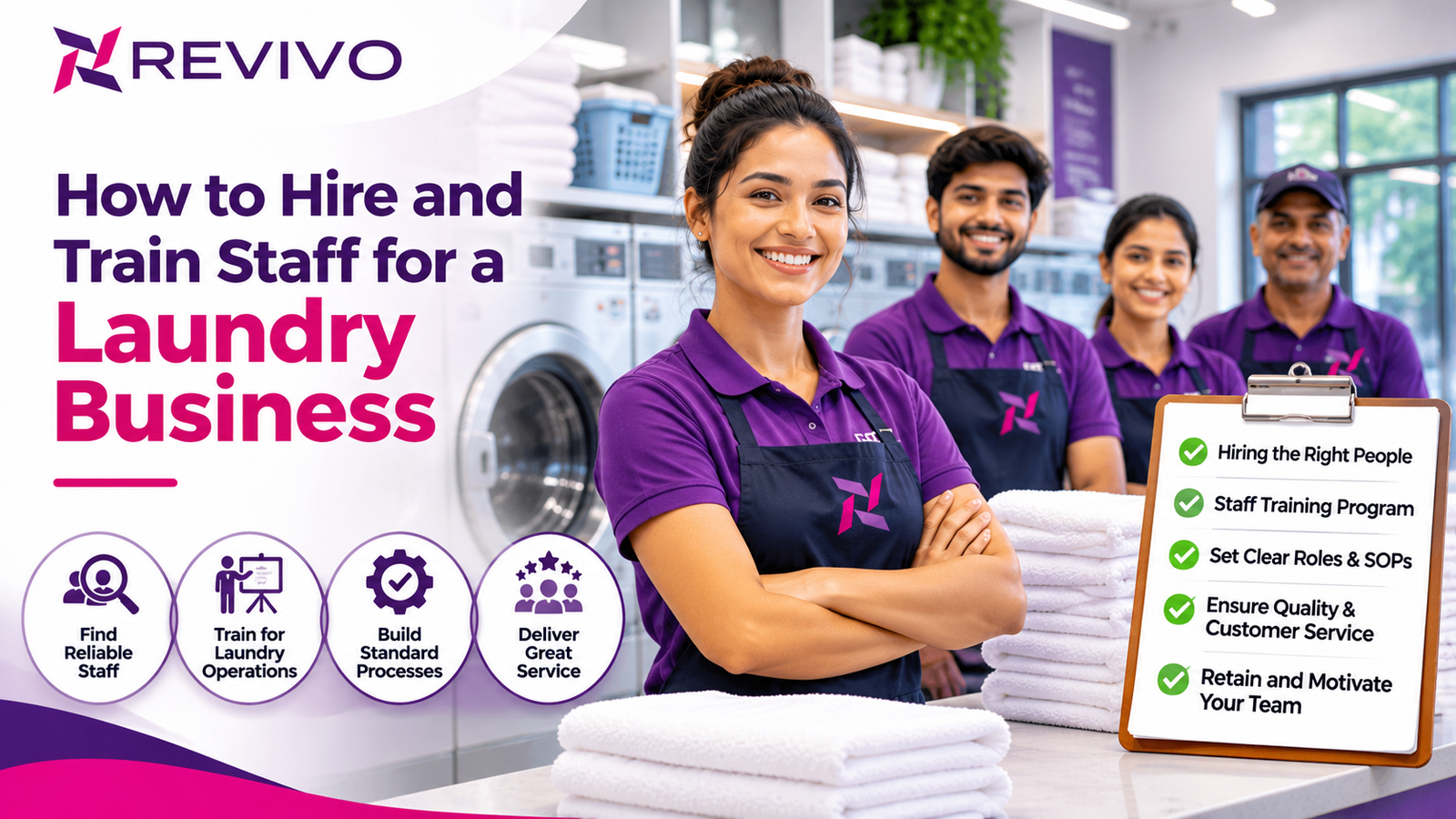
Running a successful laundry business requires more than good machines and quality cleaning products. You also need reliable, skilled staff who can handle garments carefully, serve customers professionally and keep daily operations running smoothly. Having the right team can improve service quality, reduce mistakes and help your laundry shop grow.
Whether you are starting a new laundry shop or managing an established operation, effective laundry staff training and manpower planning are essential.
- Identify the Staff Roles Your Laundry Business Needs
Before hiring employees, understand how much work your business handles each day and which roles are required. Proper laundry business manpower planning helps you avoid overstaffing, reduce workload pressure and maintain efficient operations.
Common roles include:
Laundry operators: Responsible for sorting, washing, drying and operating laundry equipment.
Pressing staff: Handle ironing, steaming, folding and garment finishing.
Laundry runners: Collect and deliver garments between customers and the laundry shop. These roles are often advertised as laundry runner jobs.
Counter staff: Manage customer enquiries, order entries, payments, garment tagging and delivery updates.
In a small laundry shop, one employee may handle more than one responsibility. However, every task should have a clearly assigned owner.
- Focus on Hiring the Right People
Successful hiring for laundry shop operations starts with identifying candidates who are reliable, responsible and willing to learn.
Previous laundry experience is useful, but it should not be the only hiring requirement. Look for employees with good communication skills, attention to detail, punctuality and a positive attitude towards customers.
During interviews, ask candidates about their previous work experience, ability to follow instructions and approach to handling mistakes. For delivery staff, check their local area knowledge and ability to manage collection and delivery schedules.
Clearly explain working hours, salary, responsibilities, weekly holidays and performance expectations before hiring.
- Provide Structured Laundry Staff Training
A proper onboarding programme helps new employees understand their responsibilities from the beginning. Effective laundry staff training should include practical demonstrations, supervised tasks and regular feedback.
Training should cover:
Sorting garments by colour, fabric type and washing requirements.
Understanding garment care labels.
Selecting suitable washing programmes and cleaning products.
Operating washing machines and dryers safely.
Correct ironing, steaming and folding techniques.
Identifying stains and damaged garments.
Maintaining hygiene and workplace safety.
Handling customer enquiries and complaints.
Garment handling training is particularly important. Staff should learn how to check pockets, identify delicate fabrics, inspect buttons and zips, and record existing damage before processing garments.
- Create Clear Laundry SOPs
Written laundry SOPs (Standard Operating Procedures) help employees follow consistent processes and reduce operational errors.
Your SOPs should explain each stage of the service, from receiving garments to final delivery.
A basic workflow could include:
Receive garments and create a customer order.
Tag and inspect every item.
Sort garments according to fabric and care requirements.
Wash, dry and finish garments correctly.
Conduct a quality inspection.
Pack and label completed orders.
Arrange collection or delivery.
Display important instructions near workstations so employees can refer to them during daily operations.
- Introduce Quality Checks and Performance Monitoring
Regular quality checks help maintain customer satisfaction and prevent costly mistakes.
Before returning garments, check for remaining stains, incorrect folding, missing buttons, damage and order mismatches. Counter staff should verify that every item belongs to the correct customer.
You can also monitor simple performance measures, such as orders completed on time, customer complaints, rewash rates and delivery accuracy.
Use these results to identify training gaps rather than simply blaming employees for mistakes.
- Reduce Staff Turnover and Build a Reliable Team
High employee turnover can affect service quality and increase recruitment and training costs.
To retain good employees, provide fair pay, clear responsibilities, safe working conditions and opportunities to develop new skills. Recognise good performance and encourage staff to share suggestions for improving daily operations.
Regular team meetings also help resolve problems before they become bigger issues.
Build a Stronger Laundry Team
Hiring the right people and investing in structured training can make a significant difference to laundry business performance. With effective manpower planning, clear SOPs and consistent quality checks, you can build a reliable team that delivers better customer service.
If you need support with recruitment planning, staff onboarding or operational training, professional laundry business training and manpower-planning support can help you establish more efficient day-to-day operations.