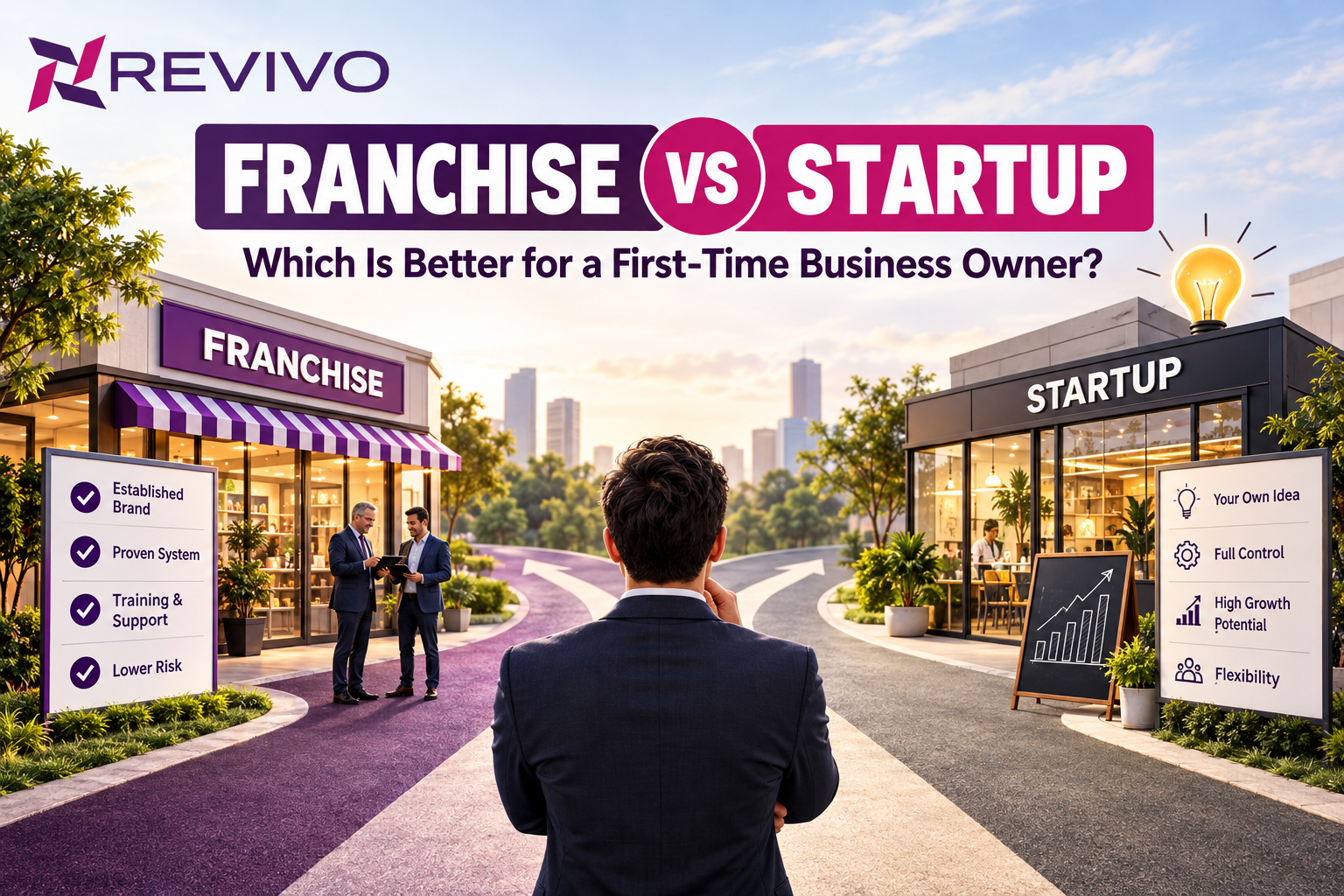
Starting a business is exciting, but the first big decision is whether to build your own brand or buy into an existing one. Here’s how the two compare.
What is a franchise?
A franchise lets you run a business under an established brand’s name, systems and support. You get operations, marketing, technology and guidance without building everything from scratch.
What is a startup?
A startup gives you total ownership and freedom. You also have to create the brand, build systems, hire and train a team and win customers from zero.
Side-by-side comparison
| Factor | Franchise | Startup |
|---|---|---|
| Brand recognition | Existing | Built from zero |
| Systems and SOPs | Provided | You create them |
| Speed to break-even | Usually faster | Often slower |
| Creative freedom | Limited | Full |
| Ongoing fees or royalties | Usually yes | None |
| Learning curve | Guided | Trial and error |
When a franchise makes sense
- It’s your first business and you want a tested playbook
- You’d rather focus on execution than design the model
- You want training, technology and marketing support from day one
When a startup makes sense
- You have a unique idea no existing brand offers
- You’re comfortable with a slower, riskier start
- You want full control over every decision
Why laundry is a strong franchise category
Laundry is a high-frequency, recession-resistant business with low inventory needs. A franchise like Revivo adds an app, CRM, delivery dashboard and hyperlocal marketing, which are expensive and slow to build yourself.
Neither path is better for everyone. If you want lower risk and a faster start, a franchise is often the smarter first step. See how it works at Revivo’s franchise page.