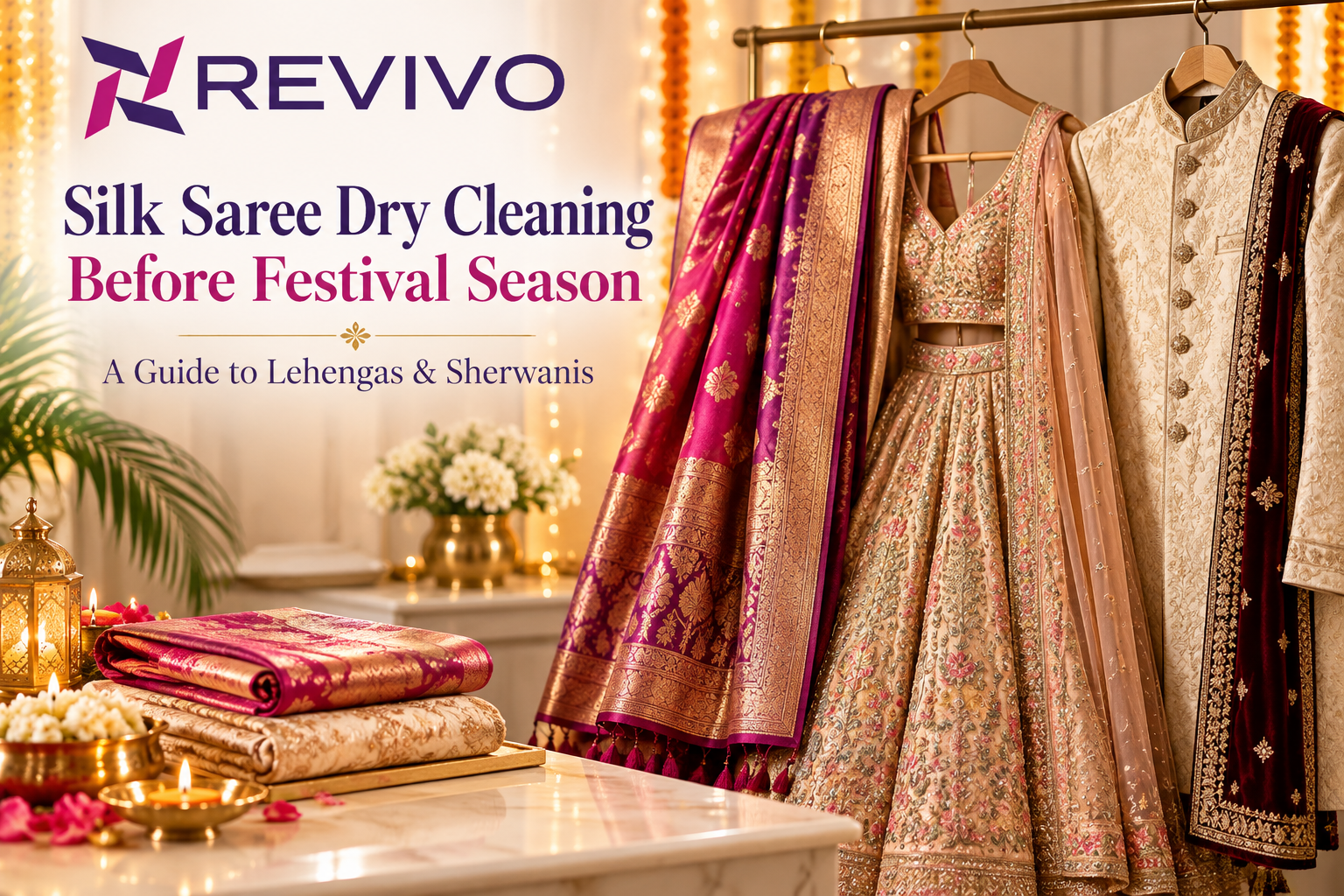
Silk saree dry cleaning starts before you hand the garment over. A quick check for stains, loose zari and fabric-care instructions can help a cleaner choose the right treatment. The same goes for a beaded lehenga or a structured sherwani. If these outfits are coming out for Navratri, Karwa Chauth or Diwali, use this checklist before your first event – and again before you put them away.
First, check the label and the whole outfit
Look for a care label, especially on a newer or designer piece. Do not assume every silk saree or embroidered outfit needs exactly the same process. Different dyes, linings, trims and embellishments can react differently to water, solvent and heat. If the label is missing or the outfit is valuable, ask the cleaner to inspect it before deciding how to treat it.
Lay out all the pieces: saree and blouse, lehenga and dupatta, or sherwani and its detachable details. Photograph any visible damage before handing them over. Point out stains and tell the cleaner what caused them if you know. Food oil, makeup, perfume and perspiration may need different attention; an old stain may not lift completely. Avoid rubbing or trying a household stain remover on delicate fabric without checking its care instructions.
Silk saree dry cleaning: mind the weave, colour and zari
Check the pallu and border for loose threads, snagging or zari that is lifting. Mark any stain so it can be assessed before cleaning or pressing. A pure silk saree, a silk-blend saree and a saree with metallic embroidery may call for different handling. Do not put a treasured saree through a regular machine wash just because it looks clean enough: test its care requirements first.
Ask how the cleaner will handle colourfastness and any embellishment, especially on an heirloom piece. Dry cleaning can be suitable for many delicate sarees, but it is not a guarantee against colour change or damage. The right method depends on the particular garment, not a blanket rule for all silk.
Lehenga dry cleaning: separate the pieces and flag loose work
A lehenga can combine net, velvet or silk with sequins, beads, stones and embroidery. Check the skirt, blouse and dupatta separately. Note anything that is already loose, as well as tears near seams or heavily worked panels. Tell the cleaner if an embellishment is glued rather than stitched, if you know; some trims need special handling.
Ask for an assessment of the complete outfit before treatment. The base fabric and decorated areas may not tolerate the same cleaning or pressing approach. Spot treatment may be considered for a mark, but it should be tested and chosen by the cleaner, not promised as a universal fix. Keep the blouse and dupatta together with the skirt when you hand the set over, and check that all pieces are recorded.
Sherwani care: protect the shape
Look closely at the collar, cuffs and underarms, then check buttons, lining and any brocade or velvet panels. Note loose stitching or an unstable button before cleaning. The shape of a sherwani comes from its layers and structure, so a home wash or aggressive press can be risky. Ask the cleaner to assess both cleaning and finishing, particularly if the outfit has a stiff collar or delicate trim.
After the festivities: clean before storing
Do not wait for a faint stain to become harder to spot. Check for food, makeup, perspiration or incense marks after each wear. Before long-term storage, have the garment cleaned as its care instructions allow and make sure it is fully dry. Store heavy pieces with appropriate support, away from direct sunlight and trapped moisture. Avoid leaving them sealed in a thin plastic cleaning bag for months; ask your cleaner about breathable storage for the fabric and embellishments involved.
Questions people ask about ethnic-wear dry cleaning
How much does lehenga dry cleaning cost?
It depends on the fabric, size, number of pieces, embroidery and condition. A heavily embellished bridal outfit may need a different assessment from a simple lehenga. Ask for a quote for the full set, including the blouse and dupatta, before booking.
How long does it take to dry clean a lehenga or silk saree?
The timing depends on the garment, its stains and the care it needs, as well as your local service availability. If you need the outfit for a particular event, share that date when booking and ask for a confirmed return date. Book early in festival season rather than assuming a standard turnaround.
Can a silk saree with zari work be dry cleaned?
Often it can be professionally assessed for cleaning, but the answer depends on the saree’s weave, dyes, type of zari and condition. Tell the cleaner about tarnishing or loose threads and show them the care label. Avoid scrubbing the zari or applying heat to it at home.
Should I clean an outfit if it has no visible stain?
Check for perfume, perspiration and food marks that may be less obvious at first. The care label and the garment’s condition should guide whether cleaning is needed before storage. Do not clean a delicate heirloom more often than necessary simply by habit.
Get your festival outfits ready with Revivo
Revivo offers dry cleaning with doorstep pickup and delivery, so you can have your saree, lehenga or sherwani assessed without a trip to a store. Visit https://revivo.in/dry-clean/ and check https://revivo.in/best-dry-clean-shops-near-me/ for your location. Mention stains, loose work and your event date when booking. Plan ahead for Navratri, Karwa Chauth and Diwali so your outfit is ready when you need it.